Quick Answer
- Best time to visit Chefchaouen: spring (Apr–Jun) and autumn (Sep–Oct): warm days, cool mountain evenings, soft light on the blue walls.
- Where to stay: inside the blue medina for atmosphere; near Plaza Uta el-Hammam for the buzz; just outside the walls for rooftop views.
- Getting there: no airport. Take a CTM/Supratours bus or grand taxi from Fes (~4 hrs) or Tangier (~2 hrs).
- Don’t miss: the Spanish Mosque sunset viewpoint and the Akchour waterfalls day hike in the Rif.
- Stay 2 nights: one day for the medina, one for the mountains, day trips barely scratch it.
Chefchaouen, the Blue City Without the Crowds
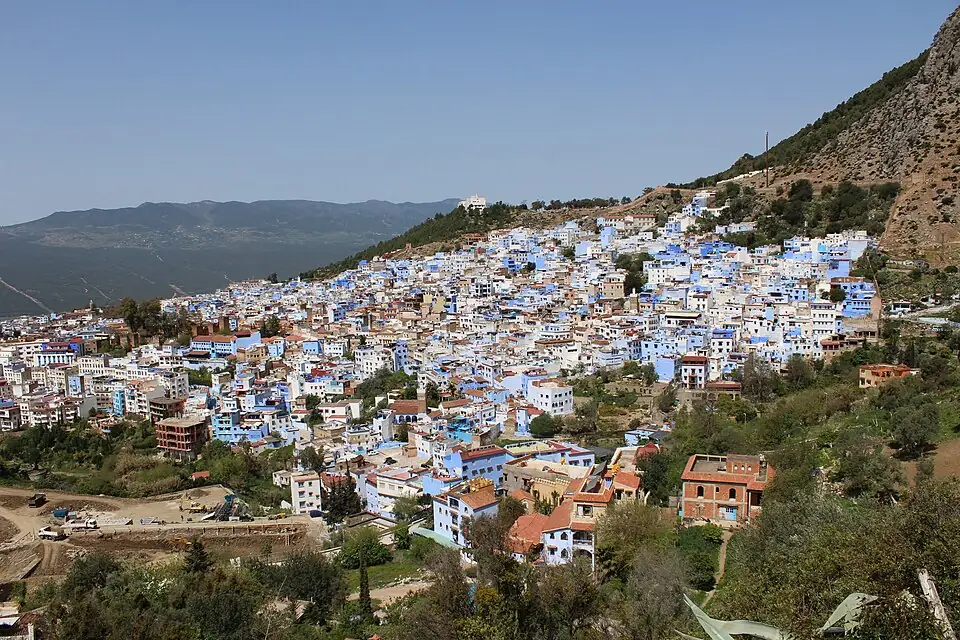
Chefchaouen gets written off as “just a photo spot”: turn up, get the blue-alley shot, move on. A half-day stop on the way from Fes barely scratches it. The blue medina isn’t a backdrop. It’s a slow, cat-filled, mountain-cool little town that rewards the people who stay long enough to get lost in it.
So here’s the short version this Chefchaouen travel guide is built on: come in spring or autumn, sleep inside the blue medina (or just outside it for the rooftop view), give it at least one full day for the lanes and the Spanish Mosque sunset, and save a second day for the Akchour waterfalls in the Rif. Do that and the blue city stops being a checklist photo and becomes the calmest, most charming stop on your whole Morocco trip.
You don’t need a guide, a tour, or a tight itinerary here. You need decent walking shoes, a charged phone, and the willingness to wander up a stepped alley with no idea where it goes. And remember that the single thing most day-trippers get wrong is staying too briefly.
What to pack for Chefchaouen
Four picks from our gear guides that suit this trip. Each card opens the live Amazon price; the links below lead to the full comparisons.
25 x 18 x 4 cm, 254 g, 2.1 L. Locking zips, a cut-resistant double-cable strap, an RFID passport pocket and a strap that clips to a chair. Reader’s Digest’s best crossbody for travel.
Check price on Amazon Live price on AmazonThe best value compression set going. A double-zip pulls the air out so a week of clothes shrinks to a few inches thick, and you get eight pieces (cubes plus a shoe and laundry bag) for roughly the price of one branded cube. The fabric is thin and the zips aren’t lifetime kit, but for the money nothing beats it.
Check price on Amazon Live price on AmazonThe reliable all-rounder: one USB-C and four USB-A ports, plugs for 200+ countries, and a built-in fuse with a spare. The adapter most people should buy.
Check price on Amazon Live price on AmazonModel A1259, 10,000mAh, about 37Wh, 215 g. Two phone charges in a jacket pocket, and small enough that the two-bank limit never becomes a question.
Check price on Amazon Live price on AmazonGetting Around Chefchaouen
Here’s the thing most people get wrong: they treat Chefchaouen as a quick day stop and never slow down enough to actually be there. The town is small and entirely walkable: the trick is knowing how to reach it and how to use your time once you do.
And honestly? Once you’re in, just walk. The blue medina is barely a few hundred metres across, every alley is a photo, and the best corners are the ones you stumble into with no map open.
Where to eat is the same instinct: follow the smell of charcoal and the local tables, not the menus aimed at tour groups:
- Tagine in a medina café. A slow-cooked chicken-and-olive or lamb-and-prune tagine, eaten in a tiled courtyard, is the classic Chefchaouen dinner: order it early, it takes time.
- Local goat cheese. The Rif is goat-cheese country; fresh white cheese with bread, olives and tomato is a simple, brilliant lunch.
- Bissara for breakfast. A warm bowl of fava-bean soup with olive oil and cumin is the local morning staple, a few dirhams and exactly right on a cool mountain morning.
- Mint tea on a rooftop. Sweet, hot and poured from a height, it’s the town’s social ritual: pick a terrace with a medina view and let an hour go.
What Not to Miss
You can wander Chefchaouen aimlessly and have a wonderful time, but a handful of things are worth aiming for.
- The blue-washed lanes. The whole point: a maze of cobalt and powder-blue alleys, doorways and stairways. Go early or late for the soft light and the empty frames before the day-trippers arrive.
- Plaza Uta el-Hammam and the Kasbah. The town’s main square, ringed by cafés and shaded by the old red-walled Kasbah fortress: climb its tower and garden for a view over the rooftops.
- The Spanish Mosque sunset viewpoint. A short hike east of the medina to the hilltop mosque, where the entire blue town spreads out below the Rif at golden hour. Bring water and go for sunset.
- The Akchour waterfalls and God’s Bridge. The big day hike: a gorge trail in the Rif leading to cascades and a natural rock arch. Start early, wear proper shoes, and make a day of it.
- Ras el-Maa. The spring at the medina’s edge where mountain water rushes out and locals do their washing, a cool, green, photogenic spot and the natural start of the walk up to the Spanish Mosque.
The quiet wins are free here: a slow tea on a rooftop, the blue lanes at first light, and the moment the Spanish Mosque viewpoint turns the whole town the colour of dusk.
Best Time to Visit Chefchaouen
Chefchaouen sits high in the Rif mountains, so it runs cooler than Morocco’s lowland cities, a blessing in summer, a chill in winter. The season you pick changes the light on those blue walls as much as the temperature. Here’s how the year actually shakes out.
| Season | Weather | Crowds | Vibe | Best for |
|---|---|---|---|---|
| Spring (Apr–Jun) | Warm days, cool nights, 15–26°C | Building | Green hills, flowing waterfalls | The all-round sweet spot, hiking, photos |
| Summer (Jul–Aug) | Warm but bearable at altitude, 22–32°C | Heaviest | Long evenings, busy lanes | Cooler escape from the lowland heat |
| Autumn (Sep–Oct) | Mild, golden, 14–25°C | Easing | Soft light, calmer medina | Best balance of weather and quiet |
| Winter (Nov–Mar) | Cold, sometimes snow on peaks, 5–15°C | Low | Quiet, atmospheric, cosy | Bargain stays, moody blue-on-grey photos |
The short answer: spring and autumn win. You get warm afternoons for wandering, cool evenings for a rooftop mint tea, and the Rif at its greenest with the Akchour waterfalls in full flow. Summer is the move if you’re chasing relief from Marrakech or Fes heat (the altitude keeps it gentler) while winter trades comfort for low prices and an almost empty medina, just pack a warm layer because mountain nights bite.
Where to Stay in Chefchaouen
The blue medina is tiny and car-free, so where you sleep is about atmosphere and views, not distance. You can walk the whole town in twenty minutes. Most stays are riads and small guesthouses tucked into the painted lanes. Here’s how the bases compare.
| Where | Vibe | What you get | Best for |
|---|---|---|---|
| Inside the blue medina | Atmospheric, painted lanes, car-free | Step out into cobalt alleys, walk everywhere | First-timers, photographers, the full blue-city feel |
| Near Plaza Uta el-Hammam | Lively, central, café-lined | The beating heart of town on your doorstep | People-watching, dining, staying in the thick of it |
| Just outside the walls | Calmer, elevated, panoramic | Rooftop and terrace views over the blue rooftops | Views, quiet, easy taxi/parking access |
If it’s your first time, sleep inside the blue medina: waking up and stepping straight into those painted alleys before the day-trippers arrive is the whole point. Stays near Plaza Uta el-Hammam put you in the lively heart of town, steps from the cafés and the Kasbah. And if you want the postcard panorama, a riad just outside the walls trades a few minutes’ walk for terrace views across the entire blue medina to the Rif beyond. Compare live rates anytime on our hotels hub.
Frequently Asked Questions
What is the best time to visit Chefchaouen?
Spring (April–June) and autumn (September–October) are ideal: warm days, cool evenings and the blue walls glowing in soft mountain light. Summer is hot but bearable thanks to the Rif altitude, and winter is genuinely cold and quiet, sometimes with a dusting of snow on the surrounding peaks.
How do I get to Chefchaouen?
There’s no airport. You reach Chefchaouen by CTM or Supratours bus, or by grand taxi, from Fes (around 4 hours) or Tangier (around 2 hours). Most travellers fly into Tangier (TNG) or Fes (FEZ) and continue overland. Buses are comfortable and book up in high season, so reserve ahead.
Where should I stay in Chefchaouen?
Stay inside the blue medina for atmosphere and to walk everywhere, near Plaza Uta el-Hammam for the lively heart of town, or just outside the walls for rooftop views over the blue rooftops and the Rif. The medina is car-free, so be ready to carry bags up steep, stepped lanes.
Is Chefchaouen worth visiting?
Yes. The blue-washed medina is one of Morocco’s most photogenic places, the pace is slower than Marrakech or Fes, and the Rif mountains put real hikes (like the Akchour waterfalls) on your doorstep. Two nights lets you wander the lanes, climb to the Spanish Mosque viewpoint and still have a full day for the hills.
How many days do you need in Chefchaouen?
Two nights is the sweet spot. One full day covers the blue medina, Plaza Uta el-Hammam, the Kasbah and the Spanish Mosque sunset, and a second day frees you up for the Akchour waterfalls or God’s Bridge hike in the Rif. Day-trippers from Fes or Tangier only scratch the surface.
Is Chefchaouen walkable?
Very. The blue medina is small, steep and walking-only: no cars, just stepped alleys, cats and cobalt walls. You’ll cover it on foot easily, though the climbs are real, so pack flat shoes with grip. For the Spanish Mosque viewpoint and Akchour, you’ll want a short taxi ride or a guide to the trailhead.
Start Planning Your Chefchaouen Trip
Get the season and the medina right and the blue city becomes the calmest, most charming stop on your Morocco trip: not a half-day photo dash. Two nights is enough to climb to the Spanish Mosque for sunset and hike Akchour, which is where the trip tends to turn memorable.
Most travellers reach Chefchaouen overland from Tangier, so fly into the gateway and continue by bus or grand taxi:
Find cheap flights to Tangier | Compare Chefchaouen hotel prices
Planning the wider trip? See our best time to visit Morocco guide and browse more stays on the hotels hub.