Quick Answer
- Worth it? One day, built around the Hassan II Mosque tour; skippable on a short Marrakech trip.
- Mosque tour: 140 dirhams for foreign adults, guided tours only, shoulders and knees covered.
- Best time: April to June and September to October; winter is mild at around 18 to 19°C by day.
- From the airport: ONCF train roughly hourly, about 45 minutes to Casa Voyageurs.
- Onward: Al Boraq to Tangier in about 2 hours 17 minutes, Marrakech about 3 hours, Fes about 4 hours.
At a glance
- Best time
- Apr–Jun, Sep–Oct; mild winter
- Time needed
- 1 to 2 days
- Currency
- Moroccan dirham (MAD)
- Language
- Arabic, Amazigh; French widely used
- Getting around
- Tram, busway, ONCF trains
Casablanca doesn’t try to be Marrakech. It’s a working Atlantic city of offices, boulevards and traffic, and that’s exactly why many travellers either rush through it or skip it. Give it one well-planned day and you get Morocco’s most impressive mosque, a 20th-century city centre unlike anywhere else in the country, and Africa’s first high-speed rail line on your doorstep. Times and prices below were checked on 10 October 2026.
Is Casablanca worth visiting, or should you skip it?
Be honest about your trip. Casablanca earns its day if you’re flying into Mohammed V Airport anyway, if a mosque interior matters to you, or if you’re heading north by train to Rabat or Tangier. It’s skippable if you have under a week, you’re flying straight into Marrakech, and you’d rather spend the time in a medina.
| Your trip | Casablanca verdict |
|---|---|
| Flying into Casablanca, onward by train | Stay one night and see the mosque before you leave |
| Want to see inside a Moroccan mosque | Plan around it: the Hassan II Mosque is the place to do it |
| Under a week, flying into Marrakech | Skip it, or do a long day trip by train |
| Looking for a historic medina experience | Fes and Marrakech do this far better |
When is the best time to visit Casablanca?
The Atlantic keeps Casablanca mild all year: it rarely gets hot and almost never freezes, which makes it a reasonable winter city break.
| Months | Average high / low | Rainfall | Best for |
|---|---|---|---|
| December to February (winter) | 17.6–18.9°C / 8.9–10.5°C | about 50–64 mm a month, 8–9 rain days | Mild city walks, low prices |
| March to May (spring) | 19.7–22.7°C / 11.6–16.0°C | drying out, 14–43 mm | Comfortable sightseeing |
| June to August (summer) | 24.6–26.7°C / 18.7–21.0°C | almost none | Corniche and beach days |
| September to November (autumn) | 21.0–25.8°C / 12.8–19.5°C | rising to about 83 mm in November | Warm September and October |
These are the 1991 to 2020 normals that Morocco’s Direction Générale de la Météorologie publishes through the WMO. November is the wettest month, so pack a light rain jacket from November to January. For the wider country, compare our best time to visit Morocco guide.
Where should you stay in Casablanca?
For a short stay, location decides everything: you want to be on the tram and close to the station you’ll leave from.
| Area | Best for | Trade-off |
|---|---|---|
| City centre (Place Mohammed V, Boulevard Mohammed V) | First-timers, Art Deco walks, tram line | Busy and noisy by day |
| Near Casa Voyageurs station | Early Al Boraq or Marrakech trains, airport train | Little to see nearby |
| Aïn Diab Corniche | Ocean views, sunset promenade, beaches | A taxi or tram ride from the centre |
| Maarif and Anfa | Quieter residential streets, shops, cafés | Fewer sights within walking distance |
On a one-night stopover, pick the city centre or a hotel near Casa Voyageurs. If you have two nights and want the ocean, split the stay or base yourself on the Corniche. Compare Casablanca hotels by area before you settle on one.
How do you get to and around Casablanca?
Mohammed V Airport is Morocco’s largest hub and often the cheapest long-haul gateway. Trains link it to the city, and trains link the city to the rest of the country.
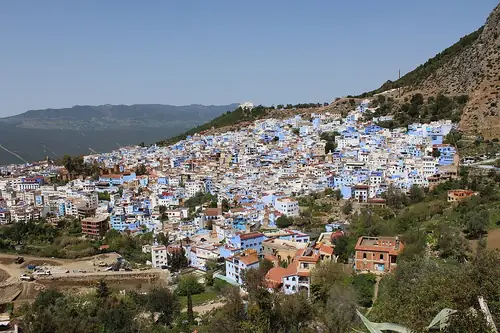
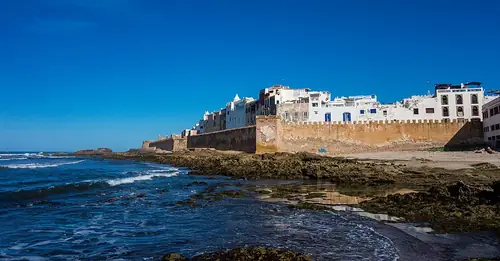
Chefchaouen and Essaouira are not on the rail network, so you finish those journeys by bus. Our getting around Morocco guide compares trains, buses and grands taxis.
What should you not miss in Casablanca?
| Sight | Entry | Tip |
|---|---|---|
| Hassan II Mosque | 140 dirhams for foreign adults, guided tour only | Cover shoulders and knees; shoes come off inside |
| Habous quarter (the “new medina”) | Free | Olive market, Mahkama du Pacha, traditional pastry shops |
| Boulevard Mohammed V and Place Mohammed V | Free | 1920s and 1930s Art Deco and Hispano-Moorish facades |
| Aïn Diab Corniche | Free | Walk it at sunset, with the mosque behind you |
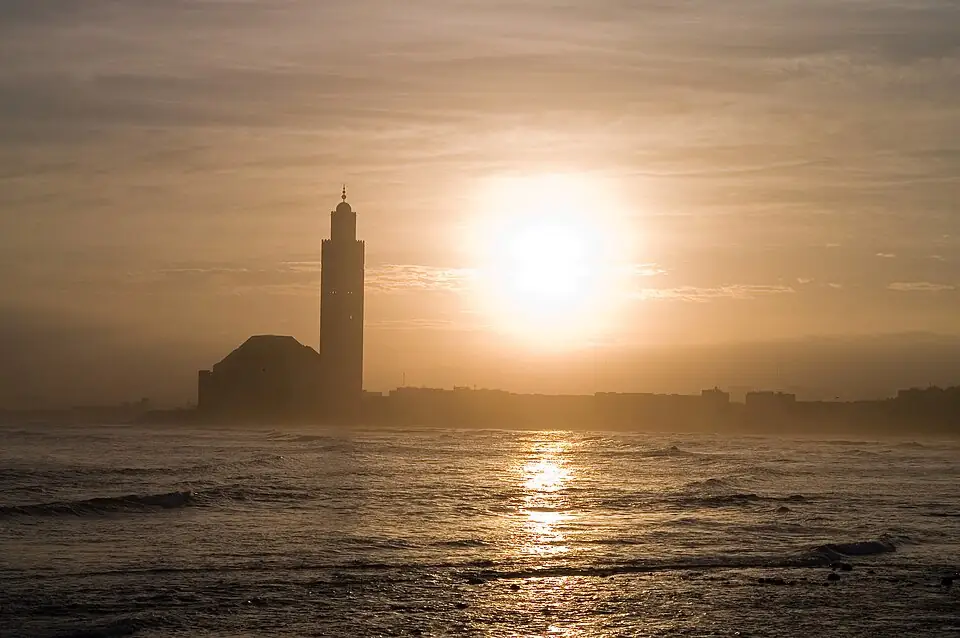
The Hassan II Mosque is the reason to come. It stands on the ocean’s edge, and its guided tour takes you through the prayer hall and the ablution hall, a showcase of Moroccan craftsmanship in carved wood, plaster and zellige tile. From 16 September to 14 March, tours run Saturday to Thursday at 9, 10 and 11 am and 2 pm, and on Fridays at 9 and 10 am and 2 pm; from 15 March to 15 September a 3 pm tour is added. Ramadan has its own timetable. Foreign students and Moroccan residents pay 70 dirhams, and children aged 4 to 12 pay 30. Shorts and sleeveless tops are not allowed. If you’re curious why this mosque is special, our Morocco etiquette guide explains why non-Muslims can’t enter most others.
The Habous quarter, often called the “new medina”, is a calm grid of arcaded lanes, and the regional tourism board’s circuit takes in the Mahkama du Pacha, with its Moorish arches, the olive souk (olives, olive oil and pastes) and long-running pastry shops selling gazelle horns and ghriba biscuits. It’s calmer and easier to browse than the big medinas.
The Art Deco centre around Boulevard Mohammed V is lined with buildings from the 1920s and 1930s that mix European and Moroccan influences. Walk it in the morning, then take the tram towards the Corniche for the afternoon.
- Activate before you fly: data works on arrival
- Plans for 200+ countries from a few dollars
- Keep your number; no physical SIM swap
What goes wrong in Casablanca?
- Missing the mosque tour slot. Tours run at fixed hours only, and there is no 11 am tour on Fridays. Plan your day around your tour, not the other way round.
- Dressing for the beach. Shorts and sleeveless tops will keep you out of the mosque. Bring a layer that covers your shoulders and knees.
- Going to the wrong station. Al Boraq trains leave from Casa Voyageurs, not Casa Port.
- Expecting a medina city. Casablanca’s old medina is small and plain next to Fes or Marrakech. Come for the mosque and the 20th-century architecture instead.
- Rainy-season surprises. November to January bring most of the year’s rain, so keep an indoor fallback.
Buying a local SIM or eSIM on arrival makes maps and ride-hailing easier; see our Morocco eSIM guide. Most Western visitors enter visa-free, but check our Morocco visa guide for your passport.
How many days do you need in Casablanca?
One day covers the essentials: the mosque tour in the morning, the Habous quarter and the Art Deco centre in the afternoon, and the Corniche at sunset. A second day lets you take the Al Boraq to Rabat and back. Then move on: Marrakech is about 3 hours south by train, Fes about 4 hours east, and the coast at Essaouira or the blue town of Chefchaouen are bus journeys away. Our Morocco itinerary and Morocco budget guides help you fit Casablanca into a longer trip.
Sources
Tour times and prices come from the Fondation de la Mosquée Hassan II, climate figures from the WMO World Weather Information Service (data from Morocco’s Direction Générale de la Météorologie), train times from ONCF’s timetables in force from 14 September 2026, tram fares from Casatramway, and neighbourhood details from the Visit Casablanca tourism board. Full links are in the sources box on this page.
Frequently Asked Questions
Is Casablanca worth visiting?
Yes, for one day. Casablanca is Morocco’s biggest city and a business hub rather than a medina city, so it has fewer classic sights than Marrakech or Fes. The Hassan II Mosque, one of the few mosques in Morocco that non-Muslims can enter on a guided tour, justifies a stop on its own, and the Habous quarter, the Art Deco centre and the Corniche fill the rest of the day. If you fly straight into Marrakech and have under a week, you can skip it.
How much is the Hassan II Mosque tour?
The Fondation de la Mosquée Hassan II charges 140 dirhams for foreign adults, 70 dirhams for Moroccan residents and foreign students, 30 dirhams for children aged 4 to 12 and Moroccan students, and nothing for children under 4. You can only see the inside on a guided tour, which covers the prayer hall and the ablution hall. Cover your shoulders and knees, as shorts and sleeveless tops are not allowed.
What are the Hassan II Mosque tour times?
From 16 September to 14 March, tours start at 9, 10 and 11 am and 2 pm from Saturday to Thursday, and at 9 and 10 am and 2 pm on Fridays. From 15 March to 15 September a 3 pm tour is added. Ramadan has its own schedule, so check the foundation’s site before you go.
How do I get from Casablanca airport to the city?
ONCF runs a train from Mohammed V Airport roughly every hour, from about 5:55 am to 10:55 pm, reaching Casa Voyageurs station in about 45 minutes under the timetable in force from 14 September 2026. From there, the Casablanca tram costs 8 dirhams for a single ride, or 6 dirhams per ride on a rechargeable card.
What is the best time to visit Casablanca?
April to June and September to October are the most comfortable, with average highs of about 20 to 26°C. Winter is mild, with average highs of about 18 to 19°C from December to February, but November to January are the wettest months. Summer is warm rather than hot, with highs around 25 to 27°C, because of the Atlantic breeze.
How long is the train from Casablanca to Tangier or Marrakech?
Under the ONCF timetable in force from 14 September 2026, the Al Boraq high-speed train runs hourly from Casa Voyageurs to Tangier in about 2 hours 17 minutes, stopping at Rabat Agdal after about 50 minutes. Al Atlas trains reach Marrakech in about 3 hours and Fes in about 4 hours.
Start planning your Casablanca trip
If Casablanca is only your arrival point, book the airport train and a room near Casa Voyageurs and spend the saved time on the mosque. If you’re building a longer Morocco trip around it, compare flights into Casablanca against Marrakech first: the cheaper gateway often decides the route.
Find cheap flights to Casablanca | Compare Casablanca hotel prices
Planning the wider trip? See our Morocco travel guide, Marrakech where to stay and the hotels hub.