Quick Answer
- Best time: July to October for the migration; January and February for a dry, cheaper safari without the herds.
- Fees: 100 US dollars a day January to June, 200 US dollars July to December, for non-resident adults.
- Where to stay: the reserve for river crossings; a conservancy for fewer vehicles, walks and night drives.
- Getting there: about an hour by Safarilink or Airkenya from Wilson Airport, 15 kg soft bags only, or most of a day by road.
- Ethics: no crowding at the river, five vehicles per sighting in Mara North, 10-minute turns in the Triangle.
At a glance
- Best time
- Jul–Oct migration, Jan–Feb dry season
- Time needed
- 3 to 4 nights
- Currency
- Kenyan shilling (KES); fees in US dollars
- Language
- English, Kiswahili and Maa
- Getting around
- Safari flights from Wilson Airport, or 4x4
The Maasai Mara is the safari most people picture when they think of Kenya: open grassland, flat-topped acacias and, for four months a year, wildebeest pouring across a crocodile river. Getting it right comes down to three decisions: the month, reserve or conservancy, and flying or driving. Fees and rules below were checked on 10 October 2026.
When is the best time to visit the Maasai Mara?
The Mara sits on the equator at altitude, so it never gets truly hot: the year is shaped by rain and by where the herds are. The figures are Kenya Meteorological Department normals for Narok, the county town on the road in from Nairobi, published on the WMO World Weather Information Service.
| Month | Average high / low (Narok) | Rain | What is happening in the Mara |
|---|---|---|---|
| January | 26.9°C / 9.4°C | 79.3 mm | Dry and sunny, low-season fee, herds in Tanzania |
| February | 27.2°C / 9.4°C | 66.7 mm | Warmest month, quiet camps |
| March | 26.9°C / 10.4°C | 94.9 mm | Rains begin |
| April | 24.8°C / 12.4°C | 135.4 mm | Wettest month, some camps close |
| May | 23.1°C / 12.6°C | 92.0 mm | Green season, lowest prices |
| June | 22.4°C / 10.5°C | 25.9 mm | Dry season starts, first herds may arrive |
| July | 22.3°C / 9.0°C | 16.6 mm | Migration arrives, high-season fee from 1 July |
| August | 23.3°C / 9.3°C | 24.2 mm | River crossings, busiest month |
| September | 25.2°C / 9.0°C | 25.3 mm | River crossings, peak season |
| October | 25.9°C / 10.1°C | 31.0 mm | Herds start heading south |
| November | 25.4°C / 9.9°C | 73.7 mm | Short rains, quieter |
| December | 25.9°C / 9.4°C | 75.9 mm | Holiday safaris |
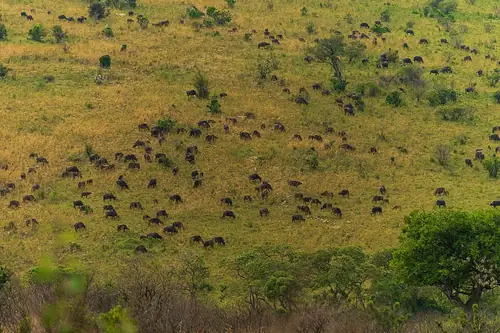
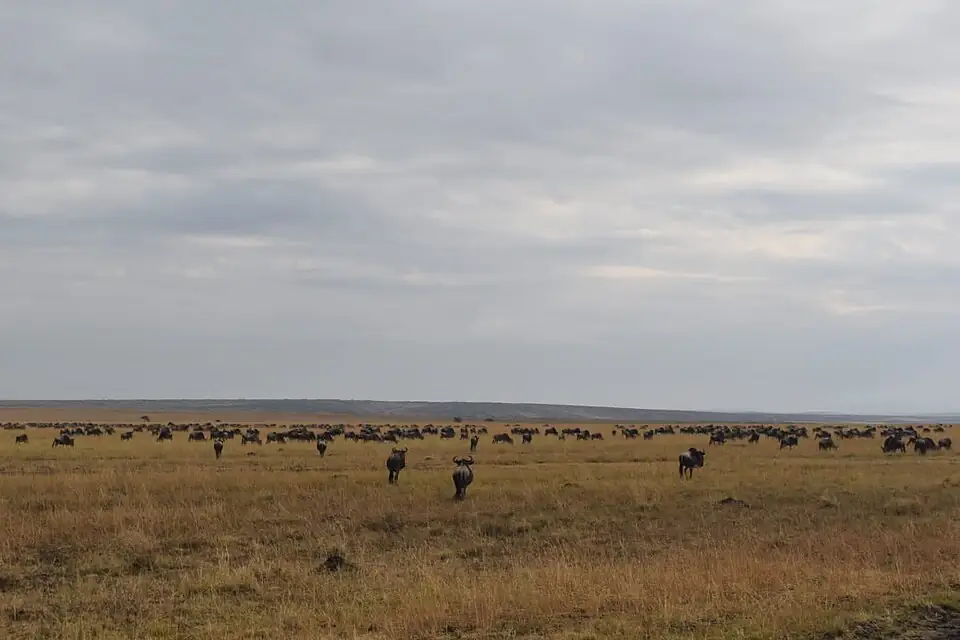
Migration season (July to October). Magical Kenya, the Kenya Tourism Board’s site, describes the migration as a year-round movement between the Serengeti in Tanzania and the Maasai Mara, with its most dramatic stage from July to October, when wildebeest and zebras cross the Mara River into Kenya. The Mara Conservancy notes the herds usually arrive somewhere in June or July, can stay until November, and that crossings are frequent but hard to predict, so a crossing is never guaranteed on a given day.
The winter window (January and February). These are the driest months outside the long dry season, with highs around 27°C, and the reserve fee halves. The catch is honest: the migrating herds spend the early part of the year on Tanzania’s Serengeti plains, which is where the calves are born, so you will not see calving or crossings in the Mara then. You still get the reserve’s resident predators and plains game with far fewer vehicles, which is why it suits a northern-winter escape. Mornings drop to around 9°C all year, so pack a warm layer for early drives.
Reserve or conservancy: where should you stay?
The Greater Mara has two kinds of land, and the choice shapes your safari more than the choice of camp.
| Area | Best for | Trade-off |
|---|---|---|
| National reserve, Narok side (Talek, Sekenani, Musiara) | River crossings, flexibility, the widest range of lodges and camps | Day visitors and many vehicles at big sightings |
| Mara Triangle (west of the Mara River) | Crossing points on the western bank, managed by the non-profit Mara Conservancy | Fewer camps; reached via Oloololo Gate or across Purungat Bridge |
| Private conservancies (Mara North, Olare Motorogi, Naboisho and others) | Small numbers, night drives and walks where allowed | Usually a drive to reach the river crossings, higher camp rates |
The Maasai Mara Wildlife Conservancies Association counts 24 conservancies on the reserve’s borders, land leased from more than 16,000 Maasai landowners, who receive guaranteed lease fees. Access is generally limited to guests of each conservancy’s member camps. Mara North’s own rules allow no more than five vehicles at a sighting, with others waiting 100 metres back for their turn, and night drives only in designated areas with red filters, back in camp by 10pm.
Camp or lodge? Tented camps put you closer to the sounds of the bush, often with en-suite bathrooms under canvas; lodges are permanent buildings with more facilities and are often easier for families. Both usually sell full-board packages that include game drives, and many include the park fee: check the quote says so.
Compare Maasai Mara camps and lodgesHow do you get to the Maasai Mara?
Most visitors arrive in Kenya through Nairobi, so start with our Nairobi guide for the airport and the eTA.
How much are the Maasai Mara fees in 2026?
The Mara Conservancy publishes these 12-hour rates for the Mara Triangle, and they apply to non-residents whether they sleep inside or outside the reserve.
| Visitor | 1 January to 30 June | 1 July to 31 December |
|---|---|---|
| Non-resident adult | 100 US dollars a day | 200 US dollars a day |
| Non-resident child, 9 to 17 | 50 US dollars | 50 US dollars |
| Child, 8 and under | Free | Free |
A ticket covers 6am to 6pm, whatever time you enter, and does not carry over to the next day. Narok County, which manages the rest of the reserve, charges around the same rates. Conservancy fees are separate and are normally built into your camp’s nightly rate.
What should you not miss in the Maasai Mara?
- A full day by the Mara River in migration season. Take a packed lunch and wait: herds can mass on the bank for hours before crossing, or not at all.
- Big cats. Lions, leopards and cheetahs live in the Mara year-round, which is what makes January and February worthwhile.
- A guided walk or night drive in a conservancy, where your camp is allowed to offer them.
- A visit to a Maasai community, arranged through your camp so the money reaches the village.
Wildlife rules: how to watch without harming
What goes wrong on a Maasai Mara trip?
- Expecting a crossing on demand. Even in August, crossings depend on the herds; three or four nights gives you better odds than one.
- Booking January for calving. Calving happens in Tanzania; book the Mara in January for dry weather and lower fees, not for newborn wildebeest.
- Hard suitcases on a bush flight. Light aircraft have small, irregular holds, and Safarilink warns that rigid suitcases may have to wait for a later flight.
- Not checking what the package includes. At 200 US dollars per adult per day in high season, the park fee is a large part of the bill; make sure the quote lists it.
How many days do you need in the Maasai Mara?
Three to four nights. That gives you six or more game drives, a full day at the river in migration season and a buffer for days when the herds do not cross. Two nights can work if you fly. Many trips pair the Mara with Nairobi and Amboseli, then a few days on the coast; the Kenya guide compares the parks month by month. If you are weighing Kenya against a self-drive safari, see our Kruger guide.
- Activate before you fly: data works on arrival
- Plans for 200+ countries from a few dollars
- Keep your number; no physical SIM swap
Frequently Asked Questions
When is the best time to visit the Maasai Mara?
July to October is migration season: the Kenya Tourism Board places the Mara River crossings in those months, and Narok normals give just 16.6 mm of rain in July. January and February are the other dry window, with highs around 27°C, half the high-season reserve fee and quieter camps, but the wildebeest herds are mostly in Tanzania then. April and May are the wettest months.
How much does the Maasai Mara cost to enter in 2026?
The Mara Conservancy, which runs the Mara Triangle, charges non-resident adults 100 US dollars a day from 1 January to 30 June and 200 US dollars from 1 July to 31 December. Children aged 9 to 17 pay 50 US dollars all year and under-9s enter free. A ticket is valid from 6am to 6pm, it does not carry over to the next day, and the Triangle accepts only M-Pesa or card, not cash.
Can I see wildebeest calving in the Maasai Mara in January and February?
No, not the calving itself. Early in the year the migrating herds are on Tanzania’s Serengeti plains, which is where the calves are born. The Mara in January and February still has its resident lions, elephants, cheetahs and plains game, dry weather and the low-season fee of 100 US dollars a day, which makes it a good winter safari without the river crossings.
Should I fly or drive from Nairobi to the Maasai Mara?
Flying saves most of a day. Safarilink and Airkenya fly light aircraft from Nairobi’s Wilson Airport to airstrips across the Mara in about an hour, and your camp collects you from the strip, but both limit luggage to 15 kg per person in soft-sided bags. Driving is cheaper and the road is tarmacked as far as Sekenani Gate, according to the Mara Conservancy, but it is a long day in a vehicle.
Is it better to stay in the reserve or a conservancy?
The national reserve is where most river crossings happen and day visitors can enter, so sightings can draw many vehicles. The private conservancies on its border are leased from Maasai landowners and generally limit access to guests of their member camps. Mara North, for example, allows no more than 5 vehicles at a sighting and permits night drives in designated areas, back by 10pm.
How many days do you need in the Maasai Mara?
Three to four nights is the usual stay: enough for six or more game drives, a full day out by the river in migration season, and some slack for days when the crossings do not happen. Two nights works if you fly in, but on the road the drive from Nairobi takes up most of your first and last days.
Start planning your Maasai Mara trip
If a safari package already includes your flights, camp and park fees, you can skip this part. If you are building the trip yourself, book your international flight to Nairobi first, then the camp, then the bush flight to match.
Find cheap flights to Nairobi | Compare Maasai Mara camp prices
Planning the wider trip? See our best time to visit Kenya guide, the Nairobi guide, where to go in August for migration season, where to go in February for the winter window, and the best travel cameras for wildlife.